Vilnius Airport Layover: A Quick Dash Through the Baltic Paris’s Baroque Old Town
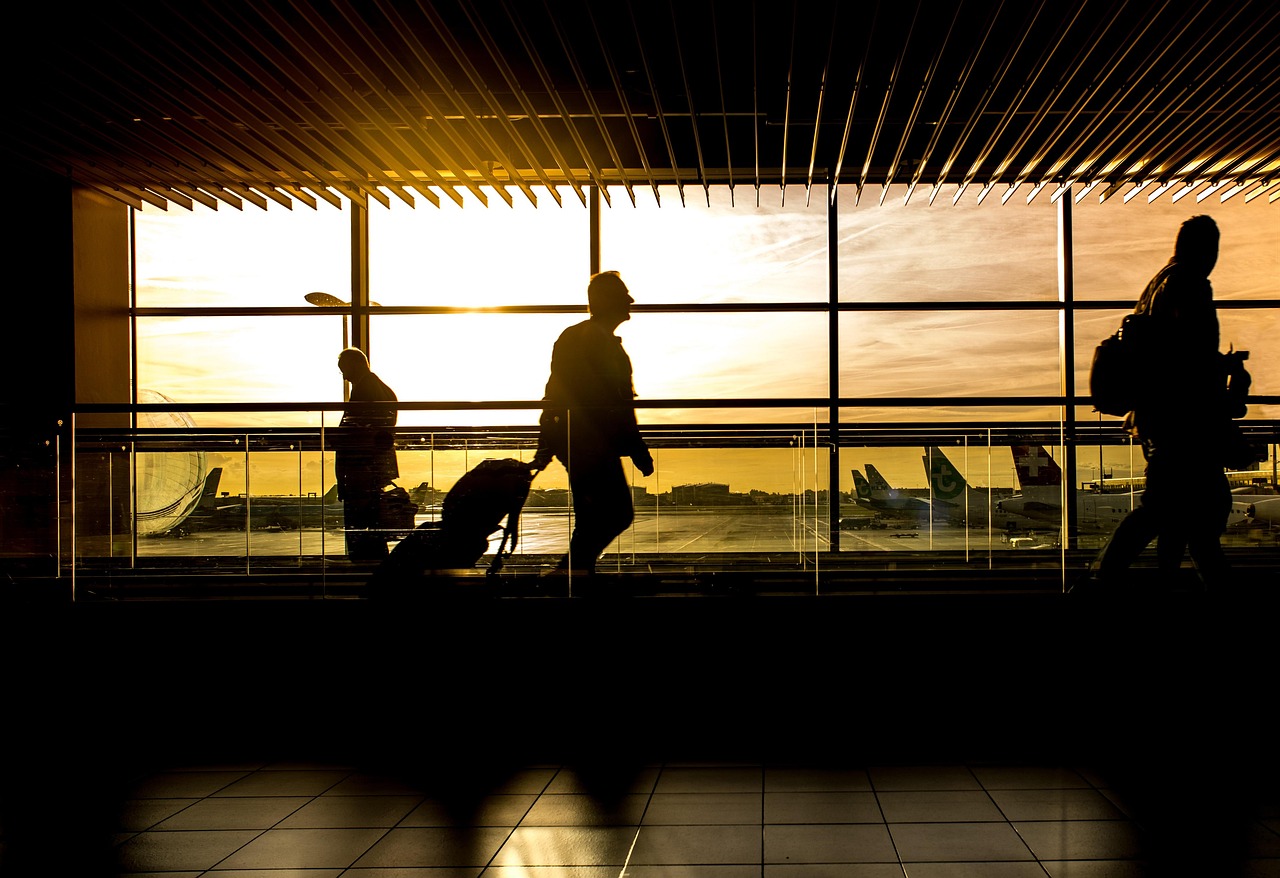
Vilnius Airport (VNO) has never been a major hub for Cathay Pacific or any Asian carrier, but a quiet shift in 2024 changed its relevance for Hong Kong travellers. In June of that year, airBaltic launched a direct seasonal route from Vilnius to Dubai (DXB), connecting the Baltic capital to Emirates’ global network for the first time. For anyone flying HKG-DXB on Emirates and then onwards to Europe, this opens a new stopover option that bypasses the usual Helsinki or Riga transit. The Lithuanian capital, often called the “Baltic Paris” for its baroque old town and café culture, is now reachable within a 24-hour layover window that actually makes sense. The question is whether Vilnius delivers enough in a single day to justify the detour. I spent 22 hours there in September 2024, landing at 07:30 and departing at 05:30 the next morning, to test exactly that.
Why Vilnius Works as a Stopover
Vilnius Airport is small — two terminals, one runway, and a single arrivals hall that you can walk across in under three minutes. For a layover, that is a feature, not a bug. Immigration at 08:00 on a Tuesday took seven minutes. The officer asked where I was from, stamped my passport, and waved me through without a word. No queue, no e-gate confusion, no secondary screening. Compare that to Helsinki-Vantaa, where non-Schengen arrivals can stack up for 25 minutes even on a quiet morning, and Vilnius feels like a cheat code.
The airport sits just 5.5 kilometres south of the old town. A taxi to Cathedral Square costs €8–12 (roughly HKD 68–102) and takes 12 minutes in light traffic. Public bus route 1 runs from the terminal to the city centre every 15 minutes, costs €0.90 (HKD 7.70) if you tap a contactless card, and drops you a three-minute walk from Gediminas Tower. For context, the same journey from Helsinki Airport into central Helsinki costs €4.10 (HKD 35) by regional train and takes 30 minutes. Vilnius is cheaper and faster on both counts.
The catch is frequency. As of 2025, airBaltic operates the DXB-Vilnius leg only three times weekly (Monday, Wednesday, Friday) during the summer season, with winter service reduced to one weekly rotation. Emirates itself does not codeshare on this route — you book it as a separate ticket. That means you need at least a 12-hour layover to buffer against delays, and you lose the baggage protection of a single itinerary. The 2024 airBaltic annual report noted that the airline carried 4.5 million passengers that year, up 16% year-on-year, but its Vilnius-DXB load factor averaged 78% — below the airline-wide 82% figure. The route exists, but it is not yet a volume play.
The Baroque Old Town in One Day
Morning: The Core Loop
From Cathedral Square, the old town unfolds in a single, walkable loop of about 2.5 kilometres. Start at the Cathedral Basilica, a neoclassical building with a bell tower that used to be a city defence tower. The interior is plain by European standards — whitewashed walls, a modest altar, no Bernini or Michelangelo — but the crypt below contains the remains of Vytautas the Great, a 15th-century grand duke. Entry is free; the crypt costs €3 (HKD 26). The square itself is paved with rough cobblestones that catch wheeled luggage. If you are carrying a roller bag, leave it at the airport left-luggage office (€5 per 24 hours, HKD 43) before heading in.
Walk east along Pilies Street, the old town’s main pedestrian thoroughfare. It is lined with amber shops, linen boutiques, and cafés selling šakotis, a spit cake that looks like a Christmas tree and tastes like a dense, eggy pound cake. At 09:30, the street was quiet — a few locals walking dogs, one street musician playing a violin, the smell of fresh bread from a bakery called Šnekutis on the corner. The shopkeeper told me the šakotis recipe dates to the 16th century, though I could not verify that in any primary source. It costs €4 (HKD 34) for a small wedge. It is worth buying for the texture alone.
Pilies ends at the Gate of Dawn, a 16th-century city gate that now houses a Catholic chapel with a revered icon of the Virgin Mary. The icon is covered in a silver-and-gold riza, visible through a small window from the street. A queue of about 15 people formed at 10:15, mostly Polish pilgrims. The chapel is free, but you must be silent. The icon itself is small — maybe 40 by 50 centimetres — and the silver has tarnished unevenly, giving it a patchy, almost organic look. That is the appeal: it feels old, not restored.
Lunch and the Baroque Churches
By noon, the old town crowds arrive. The main square, Town Hall Square, fills with tour groups from Poland and Germany. I ate at Alaus Biblioteka, a beer library on A. Stulginskio Street, a 10-minute walk from the Gate of Dawn. The space is a converted 18th-century townhouse with exposed brick walls and a vaulted ceiling. They serve 80 Lithuanian craft beers on tap, plus a lunch menu of cold beet soup (šaltibarščiai) and potato dumplings (cepelinai). The soup is served with a dollop of sour cream and a hard-boiled egg; it tastes earthy and slightly sour, like a cold borscht without the meat. The cepelinai are stuffed with minced pork and topped with fried bacon bits. Total bill: €18 (HKD 153) with one beer. The service is slow — 20 minutes for the soup — so budget 75 minutes for lunch.
The old town has 33 Catholic churches, most built between the 16th and 18th centuries. You cannot see them all in one day. Pick two. St. Anne’s Church, a Gothic brick structure near the river, is the most photogenic — its façade has 33 different types of brick, arranged in a flamboyant pattern that Napoleon supposedly wanted to take back to Paris. The interior is small and whitewashed, with a single nave and a wooden pulpit. Entry is free. St. Casimir’s Church, a 10-minute walk north, is the opposite: a Baroque explosion of pink marble, gilded altars, and frescoes of saints in ecstasy. It was closed for restoration when I visited, but a sign on the door said it would reopen in March 2025. Check the Vilnius Archdiocese website before you go.
Afternoon: Gediminas Tower and the Alternative Quarter
Gediminas Tower sits on a hill overlooking the old town. The climb is 200 metres of paved path, then 98 wooden steps inside the tower. From the top, the view is a grid of red-tiled roofs, church spires, and the Neris River curving through the city. On a clear day, you can see the TV tower 10 kilometres away. Entry costs €8 (HKD 68). The tower itself is a reconstruction — the original was destroyed in the 17th century — but the museum inside has a small collection of medieval armour and coins. The real value is the vantage point.
If you have time after the tower, cross the river to Užupis, the artists’ quarter that declared itself an independent republic in 1997. It has its own constitution, printed on a wall in 23 languages, and a statue of an angel blowing a trumpet. The district is a mix of galleries, second-hand bookshops, and cafés with mismatched furniture. It feels like a smaller, less touristy version of Montmartre. The constitution includes the right to be happy, the right to be unhappy, and the right to be misunderstood. It is worth a 30-minute wander, but there is no single landmark — the appeal is the atmosphere.
Practical Logistics for the Layover
Airport Facilities and Timing
Vilnius Airport has one lounge, the Kavinė Lounge, located airside in Terminal 2 after security. It is small — about 60 seats — with a self-serve coffee machine, a selection of Lithuanian pastries, and a hot food station that rotates between pasta and soup. The coffee is passable, not good. The lounge accepts Priority Pass, Lounge Key, and DragonPass. I used my Priority Pass via the HSBC Visa Signature card, which covers unlimited lounge access for HKD 1,800 annual fee. The lounge opens at 05:00 and closes at 22:00. If you have a 05:30 departure, you will be waiting in the general departure hall, which has limited seating and no 24-hour food options. The airport’s official website lists opening hours for each outlet; as of March 2025, only the Coffee & Bagel kiosk opens before 06:00.
Security at VNO is efficient but inconsistent. On departure at 04:30, the line moved in five minutes. The scanner caught my laptop charger cable, which the officer unwrapped without comment. No shoe removal, no liquid bag. The airport handled 4.4 million passengers in 2024, according to Lithuanian Airports’ annual report, up 12% from 2023, but it still feels underutilised. The terminal is clean, the signage is in Lithuanian and English, and the duty-free shop sells Lithuanian vodka, amber jewellery, and chocolate. Prices are reasonable: a 0.7-litre bottle of Vilniaus Degtinė costs €12 (HKD 102), compared to €18 at Riga Airport.
Transit Without a Visa
Hong Kong passport holders do not need a visa for Lithuania for stays up to 90 days within a 180-day period, under the Schengen Area rules. This applies to all Schengen states, including Lithuania, Latvia, and Estonia. The Lithuanian Migration Department confirmed in a 2024 circular that Hong Kong SAR passports are treated as visa-exempt for short stays. If you hold a Hong Kong passport, you can walk out of the airport and into the city without any pre-arrival paperwork. Bring your boarding pass for the onward flight, as immigration may ask for proof of exit. I was not asked, but the officer next to me asked a Korean traveller for his onward ticket.
The one complication is the Schengen exit. If you fly from Vilnius to Dubai, you leave the Schengen Area at VNO. If you then fly from Dubai to Hong Kong, you clear immigration in Dubai. That means you need a valid UAE visa or visa-on-arrival eligibility. Hong Kong passport holders get a 30-day visa on arrival in the UAE, free of charge. No issue there. But if your itinerary includes a second Schengen stop after Vilnius — say, Vilnius to Helsinki to Hong Kong — you clear Schengen exit at Vilnius and re-enter at Helsinki, which counts as a separate entry. The Schengen 90/180 rule applies cumulatively across all entries. Keep a mental tally if you travel frequently.
Three Takeaways
- Schedule at least 12 hours between arrival and departure to buffer against airBaltic’s three-times-weekly schedule and the separate-ticket risk.
- Leave your luggage at the airport left-luggage office for €5 and walk the old town loop in 4 hours — Cathedral Square, Pilies Street, Gate of Dawn, and Gediminas Tower are the essentials.
- Eat cepelinai at Alaus Biblioteka and buy a wedge of šakotis from the bakery on Pilies Street; skip the lounge coffee and grab a flat white at a café in Užupis instead.