Transit Visa Cost Comparison: A Complete Breakdown of Fees for Hong Kong Travellers’ Common Stopover Countries
A quiet but consequential shift is underway in how Hong Kong passport holders can use stopover cities. In March 2025, Turkey raised its e-Visa fee for Hong Kong SAR passport holders from USD 50 to USD 70, the first increase since the system launched in 2013. Meanwhile, Taiwan’s Mainland Affairs Council confirmed in late 2024 that the online travel permit for Hong Kong residents—a crucial tool for layovers of any length—remains free of charge but now requires a minimum of five working days for approval, up from three in 2023. These are small line items on a trip budget, but when you stack them across a year of two to three long-haul journeys, the difference between a visa-free stopover in Singapore and a USD 70 e-Visa in Istanbul adds up. For the Hong Kong traveller accustomed to the privilege of a SAR passport—162 destinations visa-free or visa-on-arrival as of February 2025, per the Henley Passport Index—the real cost of a stopover is no longer just a hotel room and a meal. It is the visa fee, the processing time, and the bureaucratic friction that determines whether a 36-hour layover in a new city is a spontaneous adventure or a pre-planned expense.
The Visa-Free Corridor: Where Your HKSAR Passport Gets You In for Free
The most cost-effective stopover is the one that costs nothing to enter. Hong Kong passport holders enjoy visa-free access to a band of cities that function as natural mid-points on the Asia-Europe and Asia-Americas arcs. The question is whether the transit infrastructure matches the visa policy.
Singapore: The Gold Standard of Free Stopovers
Singapore is the benchmark. No visa, no fee, no application—just a passport scan at Changi’s automated gates. The cost is zero on the government side, which leaves your entire stopover budget for the Jewel complex, the hawker centres, or a capsule hotel at Terminal 1. The Singapore Immigration & Checkpoints Authority confirms that Hong Kong SAR passport holders receive 30-day visa-free entry upon arrival, with no prior registration required. For a 24-hour layover between HKG and LHR, this means you can clear immigration in under 15 minutes, drop your carry-on at the YOTELAIR (HKD 650 for a four-hour block), and be eating laksa at the Maxwell Food Centre within an hour of landing. No other stopover city offers this combination of speed and zero upfront cost.
Kuala Lumpur: The Budget Alternative with a Catch
Malaysia grants Hong Kong passport holders visa-free entry for up to 90 days, per the Immigration Department of Malaysia. The catch is that KLIA’s transit infrastructure is not designed for short stopovers. The airport is 60 kilometres from the city centre; the KLIA Ekspres train costs MYR 55 (HKD 95) each way and runs for 33 minutes. For a 24-hour layover, you lose two hours to transit alone. The maths still works—HKD 190 in train fares versus a USD 70 Turkish e-Visa—but the time cost narrows the gap. If your layover is under eight hours, stay in the airport. The Plaza Premium Lounge in KLIA’s satellite building has a sleep pod room that costs MYR 120 (HKD 210) for two hours, and the food court at the Gateway mall, connected by a skybridge, serves nasi lemak for MYR 8 (HKD 14).
Taipei: The Taiwan Exception
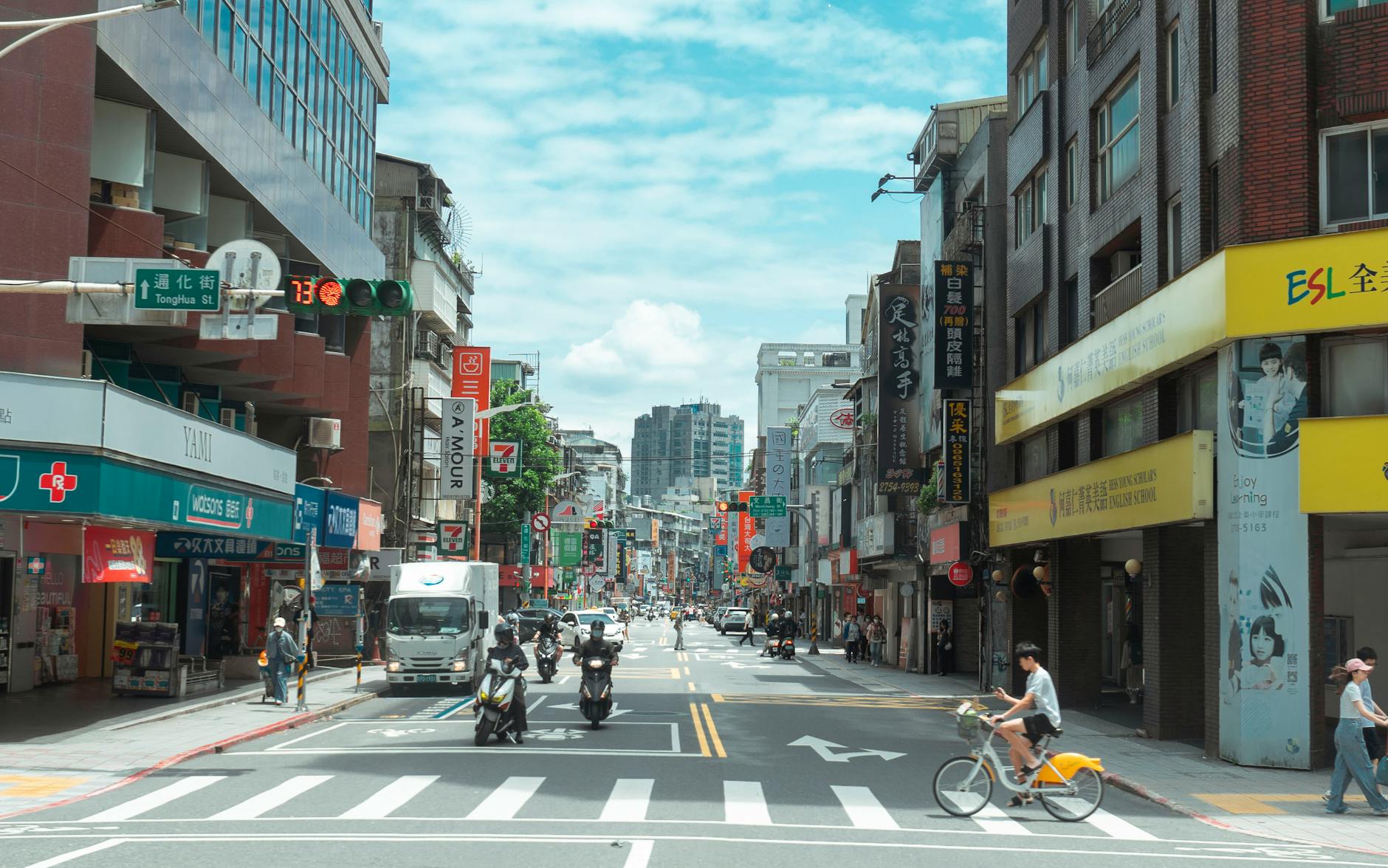
Taiwan is the outlier. The Taiwan Ministry of Foreign Affairs states that Hong Kong residents must apply for an online travel permit (入台證) before travel. The permit is free, but the processing time has stretched to five working days as of late 2024. For a spontaneous stopover, this is a dealbreaker. If you plan a week ahead, however, Taipei becomes one of the cheapest stopovers in Asia: the Taoyuan Airport MRT costs NT 150 (HKD 38) to Taipei Main Station, and a bowl of beef noodles at Lin Dong Fang costs NT 200 (HKD 50). The catch is that the permit is single-entry and valid for 30 days. If you transit through Taipei twice in a month—say, HKG to NRT and back—you need two separate permits. The bureaucracy is free, but it is not frictionless.
The Paid Visa Corridor: What You Actually Pay for a Stopover
When your flight path requires a visa, the cost is not just the fee. It is the application time, the document gathering, and the risk of rejection. For Hong Kong travellers, the three most common paid-visa stopover countries are Turkey, Vietnam, and India.
Turkey: USD 70 for 30 Days, But Is It Worth It?
Turkey’s e-Visa for Hong Kong SAR passport holders costs USD 70 (approximately HKD 545) as of March 2025. The application takes ten minutes on the official e-Visa portal, and approval is typically instant. For a 36-hour layover in Istanbul, the cost per hour of exploration is roughly HKD 15. That is not cheap, but it buys access to a city where a comparable 36-hour experience—two museum entries, three meals, and a Bosphorus ferry ride—costs around HKD 1,200. The visa fee represents 31% of that budget. Compare this to Singapore, where the visa fee is zero and the same 36-hour budget goes entirely to food and transport. The question is whether Istanbul’s layered history justifies the premium. For the traveller who values the Hagia Sophia over a hawker centre, the answer is yes. But the cost must be factored into the stopover decision, not treated as an afterthought.
Vietnam: The E-Visa Trap
Vietnam’s e-Visa for Hong Kong passport holders costs USD 25 (HKD 195) and is valid for a single entry of up to 90 days, per the Vietnam Immigration Department. The application requires a passport photo and a scanned passport page, and processing takes three working days on the official portal. The trap is that many travellers use third-party websites that charge USD 50 to USD 80 for the same service, then complain about delays. The official site is https://evisa.xuatnhapcanh.gov.vn. For a stopover in Ho Chi Minh City, the visa cost is modest, but the airport-to-city transit is a bottleneck. Tan Son Nhat Airport is 8 kilometres from District 1, but traffic can turn that into a 45-minute ride costing VND 150,000 (HKD 50) by Grab. The total stopover cost—HKD 195 visa + HKD 100 round-trip transport—is competitive with Kuala Lumpur, but the processing time makes it unsuitable for last-minute decisions.
India: The Most Expensive Transit Visa
India’s e-Tourist Visa for Hong Kong SAR passport holders costs USD 40 (HKD 312) for a 30-day single entry, plus a USD 2.5 processing fee, per the Indian Bureau of Immigration. For a transit stopover, the more relevant option is the Transit Visa, which costs USD 25 (HKD 195) but requires a confirmed onward ticket and a layover of no more than 72 hours. The application must be submitted through the Indian Visa Online portal, and processing takes four to seven working days. For a 24-hour stopover in Delhi, the visa cost is HKD 195, but the real expense is the airport-to-city transit: the Delhi Airport Metro Express costs INR 200 (HKD 19) to New Delhi station, but a taxi to Connaught Place costs INR 500 (HKD 47). The total stopover cost—HKD 195 visa + HKD 94 transport—is the highest among the paid-visa options, and the processing time makes it impractical for spontaneous stops.
The Hidden Costs: Transit Without Leaving the Airport
Not every stopover requires a visa. Many airports offer transit zones where you can stay for 24 to 48 hours without clearing immigration. The cost is not a visa fee but an opportunity cost: you see the inside of a terminal, not a city.
Changi Airport: The Transit Zone That Competes with the City
Singapore’s Changi Airport is the exception. The transit zone at Terminal 3 has a butterfly garden, a 24-hour movie theatre, and a rooftop swimming pool. The pool costs SGD 27 (HKD 158) for a non-hotel guest, including a shower and towel. For a 12-hour layover, this is cheaper than a hotel in the city. The transit zone also has a YOTELAIR at Terminal 1, where a four-hour cabin costs SGD 110 (HKD 640). The total cost of a 12-hour transit-zone stopover—HKD 158 for the pool plus HKD 640 for sleep—is HKD 798, compared to HKD 0 for visa-free entry plus HKD 650 for a city hotel. The transit zone is more expensive for sleep but cheaper for time: you save the 45-minute round-trip to the city.
Incheon Airport: The Free Transit Tour
Seoul’s Incheon Airport offers a free transit tour programme for passengers with a layover of between 4 and 24 hours. The programme covers transport, a guide, and entry to attractions like the Korean Folk Village or the Dongdaemun Design Plaza. No visa is required for transit passengers who do not clear immigration. The cost is zero. The catch is that the tours run on a fixed schedule and require a reservation 24 hours in advance. For a spontaneous stopover, the tour may be fully booked. The transit zone itself has a Korean Cultural Museum, a sleeping area with reclining chairs, and a spa (SGD 30 / HKD 175 for a 24-hour pass). For the Hong Kong traveller on a budget, Incheon’s transit zone offers the best value: free cultural activities, free sleep infrastructure, and no visa cost.
Hamad International Airport: The Premium Transit
Doha’s Hamad International Airport has a transit zone that includes a 25-metre swimming pool, a gym, a spa, and a hotel. The Oryx Airport Hotel charges QAR 450 (HKD 965) for a four-hour cabin. The transit zone is free to enter, but the cost of a comfortable stopover—pool access, a meal, and a shower—adds up to around HKD 1,200. For a 12-hour layover, this is competitive with a city hotel in Doha, but the city itself is 15 minutes away by taxi (QAR 40 / HKD 86). The transit zone is a deliberate design choice: Hamad is built for the premium traveller who values efficiency over exploration. For the Hong Kong traveller connecting from HKG to LHR via Doha, the transit zone is a comfortable cage.
The Calculation: How to Decide Where to Stop
The decision matrix for a stopover is not just about visa cost. It is about the total cost of the stopover—visa, transport, food, accommodation—divided by the time you have. For a 24-hour layover, the visa cost is a fixed overhead. For a 48-hour layover, it is amortised over a longer period, making a paid-visa city like Istanbul more attractive.
The data from the Hong Kong Immigration Department’s 2024 travel statistics shows that the average Hong Kong resident made 1.8 overseas trips per year. For a traveller making two long-haul trips per year, the annual visa cost for a stopover in Turkey would be HKD 1,090, versus HKD 0 for Singapore. Over five years, that is HKD 5,450—enough for a round-trip ticket to Bangkok. The choice is not just about the stopover city; it is about the cumulative cost of the visa regime.
Three Takeaways for the Hong Kong Traveller
- For spontaneous stopovers under 24 hours, stick to the visa-free corridor: Singapore, Kuala Lumpur, or Taipei (with a week’s notice for the permit).
- If you must stop in a paid-visa city, apply for the e-Visa on the official government portal only—third-party sites add 50% to 100% to the fee with no faster processing.
- For layovers under eight hours, calculate the cost of the transit zone versus the cost of clearing immigration: in Singapore, stay in the terminal; in Doha, the transit zone is cheaper than a city visit; in Istanbul, clear immigration and eat a kebab.