How to Choose the Best Travel Insurance for a Layover: Flight Delay and Lost Luggage Coverage Compared
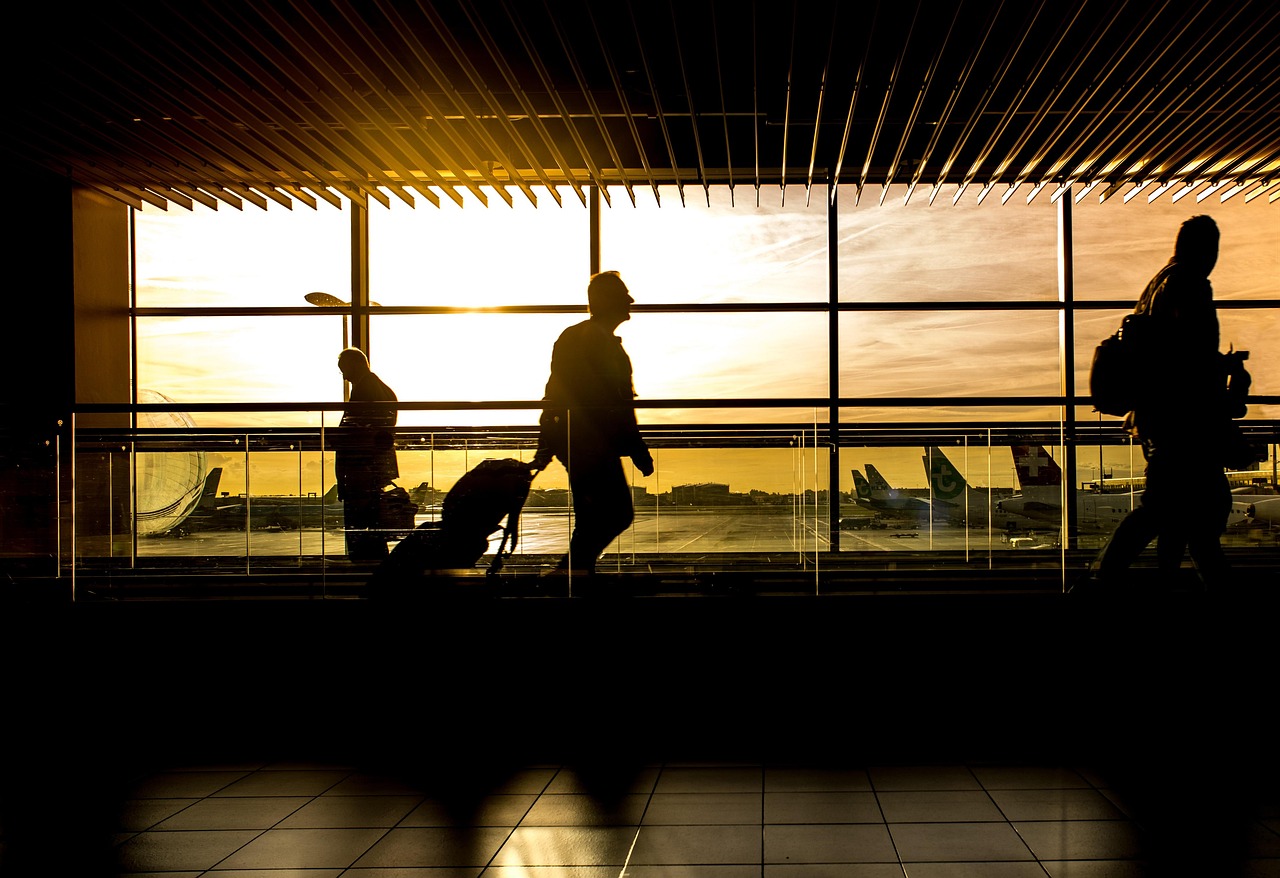
You’re sitting in the Plaza Premium Lounge at Hong Kong International Airport, sipping a cup of coffee that tastes faintly of burnt almonds, when the departure board flips your connecting flight to “Delayed – 4 hours.” The sinking feeling isn’t just about missing a dinner reservation in London—it’s the creeping realisation that your carefully planned 24-hour layover in Doha is now a mad dash through passport control, or worse, a night on an airport bench. For Hong Kong travellers, the long-haul journey is a game of dominoes: one delayed leg can topple an entire itinerary. In 2025, the global airline industry is still recalibrating after a turbulent 2024, with on-time performance across major Asian hubs like Changi and Narita hovering at roughly 78% according to the Cirium On-Time Performance Report for November 2024. Add to that the rising frequency of extreme weather events—typhoon season in the South China Sea is no longer a predictable August affair—and the calculus of travel insurance becomes less about peace of mind and more about financial survival. This is not a guide to generic annual policies. This is a dissection of what happens when your layover goes sideways, and how to pick a policy that actually pays out.
The Layover-Specific Risk: Why Standard Policies Fail
Most travel insurance policies sold in Hong Kong are written for direct flights or simple A-to-B journeys. They assume you land, collect your bag, and go to a hotel. A layover—especially one spanning 24 to 72 hours—creates a liminal space where standard definitions of “delay” and “lost luggage” break down.
The Definition of “Delay” in a Multi-Leg Journey
Here is the first trap. A policy might define “flight delay” as the number of hours your first departing flight is delayed. If your CX flight from HKG to Doha leaves on time but your connecting flight from Doha to London is delayed by six hours due to a sandstorm, many policies will not trigger a payout. They consider the delay to be on the second carrier. The Hong Kong Federation of Insurers (HKFI) 2023 Annual Report notes that approximately 35% of travel insurance complaints lodged with the regulator involve disputes over the definition of “delay” in multi-sector itineraries. When you read a policy’s fine print, look for the phrase “delay to the scheduled departure of the outward journey” versus “delay to any flight segment.” You want the latter. Policies from AXA and FWD, for example, now explicitly cover “consequential delay” on connecting flights booked on a single ticket, but the payout threshold is often higher—typically six hours instead of four.
Connecting vs. Self-Transfer: The Liability Gap
If you are on a single booking (CX codeshare or a Star Alliance ticket), the airline has a duty to rebook you. But the insurance payout for incidental expenses—a hotel room near Hamad International Airport, a meal at a 24-hour café—often requires you to have been delayed beyond the airline’s own care policy. That gap is where insurance matters. For self-transfer itineraries (common for Hong Kong travellers who piece together cheap flights on different carriers), the risk is far greater. The airline has zero obligation if you miss your connection. You need a policy that explicitly covers “missed connection” due to a delay on a separate ticket. As of 2025, only a handful of insurers offer this: Allianz Travel’s “Comprehensive” tier and the high-end plan from HSBC’s travel insurance arm. The premium is roughly 15-20% higher than a standard policy, but for a self-transfer through a hub like Istanbul or Dubai, it is the difference between a claim being paid and a claim being denied.
Lost Luggage: The Layover Black Hole
Your bag is checked through from HKG to London, but your layover is in Bangkok. You have a 48-hour window to explore the city. Your bag does not make the connection. Now you are in a Sukhumvit hotel room in the same clothes you wore on the plane, and the airline’s “tracking” system shows your bag is still in Hong Kong. This is the layover lost-luggage nightmare.
The “Baggage Delay” vs. “Baggage Loss” Distinction
Standard policies pay out for “baggage delay” after a set number of hours—usually 8 to 12 hours from arrival. But the payout is capped. A typical HK$1,000 to HK$2,000 limit for “essential items” buys you a cheap change of clothes and a toothbrush. For a layover traveller, this is inadequate. You need a policy with a higher “baggage delay” sub-limit, ideally HK$5,000 or more, and one that defines “essential items” broadly to include electronics (your laptop, your camera) and prescription medication. The Hong Kong Insurance Authority’s 2024 Consumer Survey on Travel Insurance found that 42% of claimants who filed for baggage delay during a layover were under-compensated because the policy’s definition of “essential” excluded their work devices. Policies from Zurich and Liberty Insurance now offer a “layover rider” that raises this limit to HK$8,000 for trips with a scheduled stopover of 24 hours or more.
The “Precious Items” Exclusion
Here is the detail that catches Hong Kong travellers: most policies exclude or severely limit coverage for “valuable items” left unattended. If you are at a layover hotel and your bag is stolen from the lobby while you check in, the claim is often denied. The HKFI’s 2023 Code of Practice for Travel Insurance explicitly states that insurers must clearly mark this exclusion on the policy schedule, but many travellers miss it because it is buried in the “General Exclusions” section. If you are carrying a laptop, a camera, or jewellery worth more than HK$5,000, you need a policy that covers “personal effects” with a per-item limit of at least HK$5,000 and a “theft from unattended baggage” clause that only excludes items left in plain sight in a public area. For layover travellers staying in airport hotels, this is critical. The safe in your room is your friend.
Medical Evacuation and the Layover Destination
This is the least sexy but most financially significant coverage. A medical emergency during a layover is a different beast than one at your final destination.
The “Destination” Trap in Medical Coverage
Many policies limit medical evacuation to “your country of residence” or “your final destination.” If you fall ill in Doha during a 48-hour layover, and the local hospital is inadequate, you need evacuation to a suitable facility—which could be a hospital in Dubai, London, or back to Hong Kong. The policy must explicitly cover “medical evacuation from any point of the itinerary, including intermediate stops.” The 2024 revision to the SFC’s Code of Conduct for Insurance Intermediaries (effective January 2025) now requires intermediaries to explain this clause to policyholders when the trip involves a scheduled stopover of more than 24 hours. In practice, this means the agent or online platform must flag the limitation. If you are buying a policy from a comparison site like MoneyHero or CompareGo, look for the “stopover medical” checkbox. The premium difference is negligible—often less than HK$50—but the coverage gap is enormous. A medical evacuation from the Middle East to Hong Kong can cost upwards of US$50,000 (approximately HK$390,000). Without the right clause, you are paying that bill yourself.
Pre-Existing Conditions and the Layover Trigger
If you have a pre-existing medical condition, a layover can be a trigger for a claim. The stress of a missed connection, the dehydration of a long flight, the change in climate—these can exacerbate a condition. Most standard policies exclude pre-existing conditions unless you declare them and pay an additional premium. For layover travellers, the risk is that the event (the delay, the lost bag) is the cause of the medical episode. A policy that covers “acute onset of a pre-existing condition” is rare but available. AXA’s “SmartTraveller” plan, for example, covers acute onset for travellers under 70, provided the condition had been stable for the 90 days prior to departure. This is a specific clause. You must read it.
How to Compare Policies: A Practical Framework
You are not reading a 40-page policy document. You are comparing three or four plans on a screen at 11 PM the night before you fly. Here is how to do it in ten minutes.
The Three-Number Test
For a layover itinerary, three numbers matter more than the overall sum insured. First, the “flight delay” payout per hour after the waiting period. A policy that pays HK$200 per hour after six hours is worse than one that pays HK$150 per hour after four hours, because the second triggers sooner. Second, the “baggage delay” sub-limit. Anything under HK$3,000 is inadequate for a layover traveller. Third, the “medical evacuation” limit. You want a minimum of HK$1,000,000, and ideally HK$2,000,000. The HKIA’s 2024 Market Conduct Guidelines for Travel Insurance recommend that all policies sold in Hong Kong display these three numbers in a standardized summary box on the first page of the policy schedule. If the comparison site does not show them, move on.
The “Single Ticket” Clause
If you are on a single ticket (booked through one airline or alliance), the airline’s own care policy is your primary safety net. But the insurance should cover the gap. Look for a policy that says “we will pay if the airline’s care policy does not cover the full cost of your delay.” This is called “excess coverage” and is common in high-tier plans from Standard General Insurance and Blue Cross. For self-transfer itineraries, you need “primary coverage,” meaning the insurance pays first. This is a different clause. The difference in wording is subtle but financially critical.
The “Layover Duration” Exclusion
Some policies explicitly exclude coverage if the scheduled layover exceeds a certain number of hours. A policy might say “this policy does not cover any loss or expense arising from a scheduled stopover of more than 48 hours.” This is more common than you think. If you are planning a 72-hour layover in Tokyo, read this clause. If it is there, find another policy. As of 2025, only a handful of insurers—notably FWD and AXA—offer policies with no layover duration cap for trips under 30 days.
Closing Takeaways
- For a layover of 24-72 hours, buy a policy that defines “delay” as any flight segment in your itinerary, not just the first departure from Hong Kong.
- Check the “baggage delay” sub-limit: you need at least HK$5,000 for essential items, and the policy must explicitly cover electronics and medication.
- Verify that medical evacuation covers “any point of the itinerary, including intermediate stops” and that the limit is at least HK$1,000,000.
- If you are self-transferring, you must have a policy with “missed connection” coverage and “primary” payout terms—this is non-negotiable.
- Use the three-number test (delay payout per hour, baggage delay sub-limit, medical evacuation limit) to compare policies in under ten minutes, and ignore the total sum insured if these three numbers are weak.