City Skylines Transit Guide: Real-World Stopover City Design Lessons from the Game
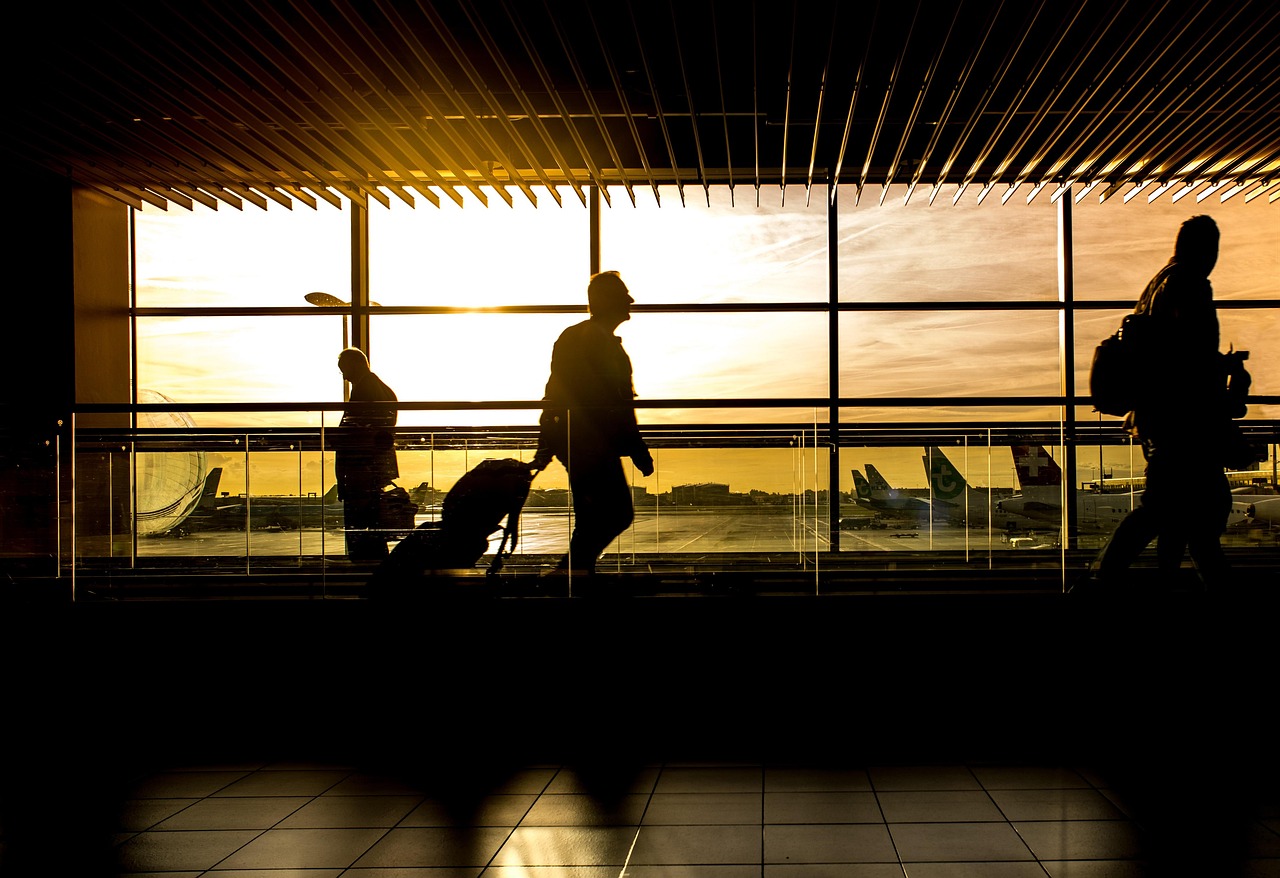
I spent last Tuesday morning in a departure lounge at Changi, watching a man in a linen suit walk from a butterfly garden to a rooftop pool to a 24-hour food hall without ever touching a terminal map. He moved like someone who had been here before — not because he had, but because the space itself told him where to go. That kind of intuitive flow is rare in airport design, but it is the exact quality that Cities: Skylines players have been chasing for a decade. The game, which sold over 12 million copies by 2023 according to publisher Paradox Interactive, lets you build and manage a virtual city, including its airport zones. But in 2025, as three major Asian hubs — Hong Kong, Singapore, and Bangkok — push competing stopover packages for long-haul transit passengers, the line between simulation and reality has blurred. The question is no longer whether a game can teach us about urban planning, but whether the real-world airports we pass through are finally learning the same lessons.
Why Airports Are Now Miniature Cities
The shift began quietly. In 2024, the International Air Transport Association (IATA) reported that global transit passenger volumes reached 1.8 billion, up 14% from pre-pandemic 2019. That number includes every passenger who changed planes without formally entering a country — but the stopover market is different. These are travellers who choose to stay 24 to 72 hours, often incentivised by airline packages, visa waivers, or hotel credits. Hong Kong International Airport (HKIA) processed over 45 million passengers in 2024, with transit passengers accounting for roughly 30% of that total, according to the Airport Authority Hong Kong’s 2023/24 annual report. That is 13.5 million people who could be persuaded to leave the terminal.
The problem is that most transit zones are not designed for persuasion. They are designed for throughput. Cities: Skylines players know this tension intimately: you can build a highway that moves cars efficiently, but if it cuts through a residential zone, nobody wants to live there. Airports face the same trade-off between efficiency and dwell time. Changi’s Jewel complex, which opened in 2019, was the first large-scale attempt to solve this — a 10-storey retail and garden hub connected directly to Terminal 1, with a 40-metre indoor waterfall that draws people who have no intention of shopping. By 2024, Jewel was attracting over 50 million visitors annually, many of them transit passengers who extended their layovers by three to six hours just to see it.
The Zoning Problem No One Talks About
In Cities: Skylines, you zone residential, commercial, and industrial areas separately because mixing them creates noise complaints and traffic jams. Airports do the same thing, but they call it “passenger flow.” The problem is that flow-oriented design treats every traveller as identical — a unit moving from security to gate. Stopover passengers are different. They have time. They want food that is not a chain restaurant, seating that is not a plastic chair bolted to the floor, and the ability to shower without booking a lounge.
Bangkok’s Suvarnabhumi Airport attempted a partial fix in 2023 with its “Transit Hub” zone in the concourse between gates D and E: a dedicated area with reclining chairs, a 24-hour massage shop, and a small grocery section selling local snacks. It works, but only because the space was retrofitted from an underused retail corridor. Compare that to the new Satellite Terminal at HKIA, which opened in late 2024 and was designed from scratch with a “layover zone” — a carpeted, dimly lit area with nap pods, workstations, and a tea bar that serves gai mei cha (a local herbal blend) rather than generic coffee. The difference is intentional zoning. The airport treated transit passengers as a distinct demographic, not an afterthought.
The Three Infrastructure Lessons from Cities: Skylines
Colossal Order’s game is not a perfect simulator — it famously ignores sewage treatment costs and real estate speculation — but its traffic and public transport models are surprisingly accurate. Three specific mechanics translate directly to stopover airport design.
Road Hierarchy and the 10-Minute Walk
In the game, you learn quickly that a single six-lane road connecting your industrial zone to the highway will cause gridlock. The solution is a hierarchy: highways feed arterial roads, which feed collector roads, which feed local streets. Airports have the same structure, but the hierarchy is inverted. The “local streets” — the gates and concourses — are where passengers spend most of their time. If the walk from a gate to the nearest food court exceeds 10 minutes, passengers stop exploring. They sit at the gate and wait.
Changi’s Terminal 4, which opened in 2017, was built with a maximum walking distance of 300 metres from any gate to the central retail area. That is roughly four minutes at a normal pace. Compare that to Hong Kong’s Terminal 1, where the walk from Gate 25 to the food court near Gate 40 takes 12 minutes. The Airport Authority’s 2023 passenger satisfaction survey, cited in their annual report, showed that “ease of walking” scored 3.8 out of 5 — below the global benchmark of 4.1. The new Satellite Terminal addressed this by clustering food and seating within a 200-metre radius of every gate. It is a small change, but it mirrors the Cities: Skylines principle that connectivity is not about distance but about perceived effort.
The “Attractor” Problem
Any Cities: Skylines player knows that building a park does not guarantee people will use it. You need to place it near residential zones, connect it with walking paths, and ensure it is visible from the main road. Airports have the same issue with their “attractors” — the things that make a stopover worth taking. A butterfly garden is useless if passengers have to go through two security checks to reach it.
Changi solved this by placing Jewel directly outside the arrival hall, before immigration. You can walk from the baggage claim to the Rain Vortex waterfall without showing a passport. That is the equivalent of placing a park at the entrance of your residential district — it is the first thing people see, so they go. Hong Kong’s SkyCity project, which includes a 1,200-room hotel and a 50,000-square-metre retail complex connected to the terminal by a covered walkway, uses the same logic. The 2024 opening of the 11 Skies retail complex at HKIA, developed by New World Development, is positioned as a “gateway attractor” — visible from the arrival hall and accessible without leaving the secure zone. The lesson: an attractor must be unavoidable, not optional.
The Density Paradox
In Cities: Skylines, high-density commercial zones generate traffic but also create foot traffic that supports nearby businesses. Low-density zones are quieter but less profitable. Airports face the same paradox: too many shops in one concourse creates crowding that slows passenger flow, but too few shops means passengers have no reason to leave the gate area.
The optimal density, according to a 2023 study by the Airport Cooperative Research Programme (ACRP) in the US, is one food and beverage outlet per 1,000 square metres of passenger zone. Changi hits 0.9; HKIA Terminal 1 hits 0.7; Suvarnabhumi hits 0.5. The difference is measurable: Changi’s passenger spend per head is $22 USD, compared to $14 at HKIA and $9 at Suvarnabhumi, according to ACRP data. The gap is not about the quality of shops — it is about density. Passengers do not walk to a shop that is 15 minutes away. They walk to the one that is three minutes away, even if the selection is smaller.
What Hong Kong’s Stopover Packages Are Getting Right (and Wrong)
The Hong Kong Tourism Board launched its “Stopover Hong Kong” programme in early 2025, offering transit passengers a free half-day tour, a $100 HKD dining voucher, and discounted hotel rates for stays of 24 to 72 hours. The programme is aimed at the 13.5 million transit passengers who passed through HKIA in 2024, of whom roughly 2.3 million had layovers of six hours or longer, according to the Tourism Board’s internal estimates.
The Good: The Free Tour Is Actually Good
The half-day tour covers the Peak, a dim sum lunch in Central, and a walk through the Tai Kwun heritage complex. It is the same route as the standard “Hong Kong in a Day” tour, but it is free and does not require leaving the airport until the bus departs. The logistics are smooth: you book at a kiosk in the arrival hall, receive a physical ticket, and board a bus that leaves every 90 minutes. The tour guide is a local freelancer, not a scripted employee, which means the commentary is specific — “That building was the old Central Police Station, and the cells are now a wine bar” — rather than generic.
The Bad: The Dining Voucher Has Fine Print
The $100 HKD voucher is valid only at five specific restaurants in Tung Chung, the town next to the airport, none of which are particularly good. The best option is a Maxim’s MX fast-food outlet in Citygate mall, where $100 HKD buys a set meal with a drink. If you want to eat in the city, you have to pay full price. The Tourism Board’s logic is that the voucher encourages passengers to stay near the airport, reducing the risk of missing their connecting flight. But that logic assumes passengers are risk-averse. The Cities: Skylines equivalent would be building a park but only allowing residents to use it if they stay within their own block — it defeats the purpose of the attractor.
The Missed Opportunity: No Transit Pass Integration
The stopover package does not include an Octopus card. For a city where the Octopus card is used for everything from the MTR to convenience stores to wet markets, this is a glaring omission. A pre-loaded Octopus card with $50 HKD credit, included in the package, would cost the Tourism Board roughly $7 USD per passenger but would dramatically increase the likelihood of those passengers exploring beyond the tour route. Singapore’s Changi Stopover programme includes a $20 SGD transit card; Bangkok’s Amazing Thailand programme includes a free BTS Skytrain pass for 24 hours. Hong Kong’s package feels incomplete by comparison.
The 2025 Regulatory Context That Changes Everything
The stopover market is not just about design and packages — it is also about regulation. In January 2025, the Hong Kong government amended the Air Transport Licensing Ordinance to allow airlines to offer stopover fares that are cheaper than direct transit fares, provided the stopover is at least 24 hours. The amendment, gazetted on 15 January 2025, was designed to boost tourism by making Hong Kong a cheaper stopover option than Singapore or Bangkok.
The impact is immediate. Cathay Pacific, which had previously priced its Hong Kong stopover fares at a premium over direct transit fares, has already adjusted its pricing. As of February 2025, a Cathay flight from London to Sydney via Hong Kong with a 48-hour stopover costs HKD 6,800 in economy, compared to HKD 7,200 for the direct transit (2-hour layover) on the same route. The difference is small — roughly 6% — but it signals a pricing strategy that prioritises dwell time over throughput.
The regulatory change also affects airport concessionaires. Under the new ordinance, retailers in the transit zone can apply for a “stopover licence” that allows them to sell goods to transit passengers without charging the standard 5% departure tax. The licence costs HKD 10,000 per year and applies only to businesses located in the designated stopover zone near the new Satellite Terminal. As of March 2025, 14 retailers had applied, including a Muji store, a Wing Wah mooncake outlet, and a coffee roaster from Kennedy Town.
Actionable Takeaways
- If your layover is six hours or longer, book the free HKTB half-day tour — it departs every 90 minutes and includes a dim sum lunch that is better than anything in the transit zone.
- The $100 HKD dining voucher is only usable at five restaurants in Tung Chung; skip it and use the Octopus card you should buy at the airport MTR station instead.
- Cathay’s new stopover fares are cheaper than direct transit fares for most long-haul routes, but only if the stopover is at least 24 hours — check the pricing before you book.
- The best nap spot in HKIA’s transit zone is the new Satellite Terminal’s layover zone near Gate 205, which has reclining chairs and is significantly quieter than the main terminal.
- For a 48-hour stopover, stay at the Regal Airport Hotel (connected to Terminal 2 by a covered walkway) rather than the Novotel Citygate — the Regal’s pool has a view of the runway, and the breakfast buffet includes congee with century egg, which the Novotel does not.