China 144-Hour Visa-Free Transit 2025: A Complete Guide to Exploring Beijing, Shanghai, and Guangzhou on a Layover
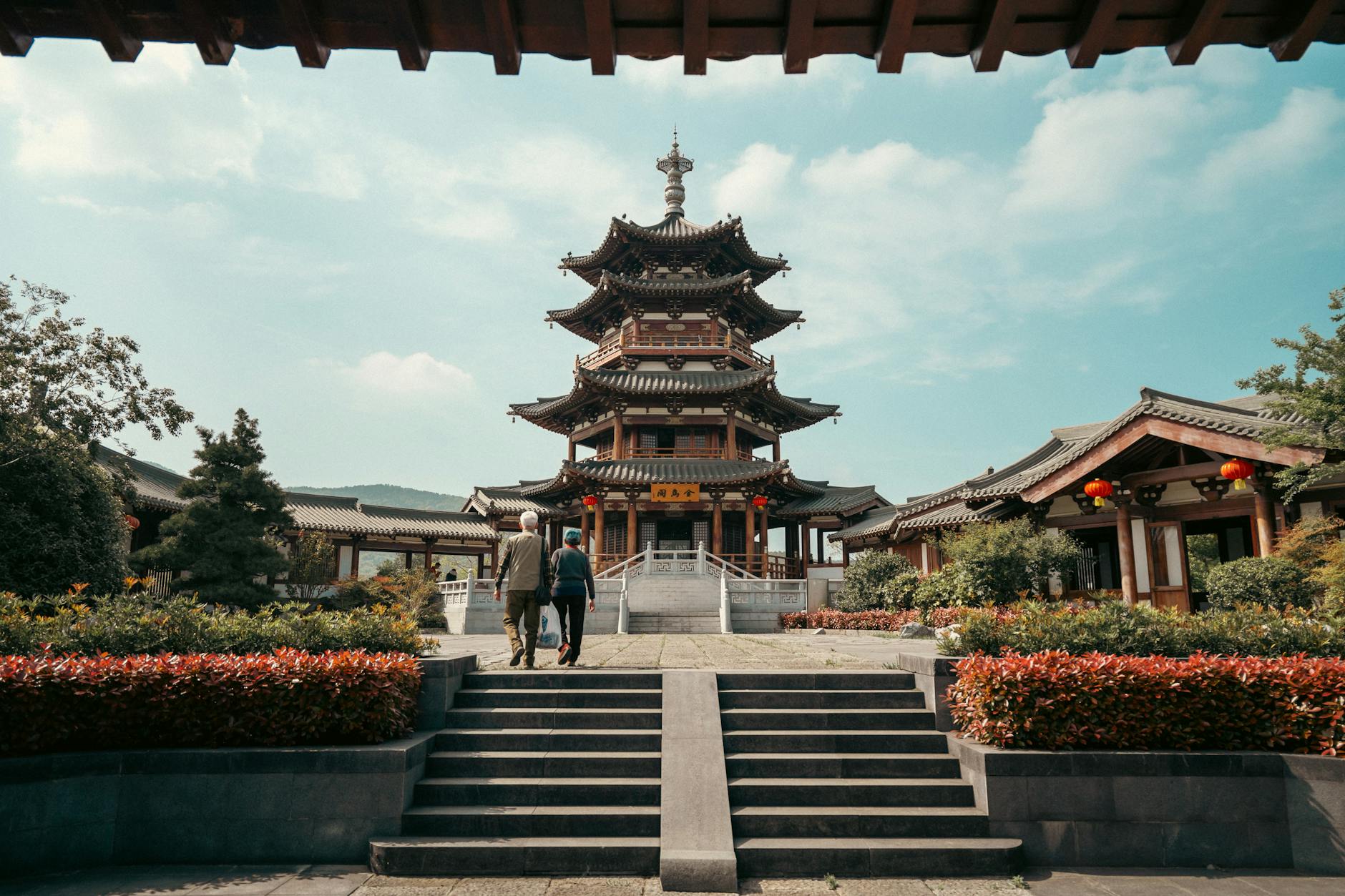
Let me tell you about the moment this policy stopped being a footnote and became a genuine travel hack. I was standing in the arrivals hall of Beijing Capital Airport’s Terminal 3, having flown Cathay Pacific CX332 from Hong Kong. My onward boarding pass to London Heathrow was already in my pocket — a separate booking, different airline, different alliance. The immigration officer glanced at my passport, then at the printed policy page I’d nervously slid across the counter. She didn’t flinch. She stamped me in for 144 hours. That was 2023. In 2025, the rules have expanded again, and the process has become smoother than most Hong Kong travellers realise.
As of 1 January 2025, China’s 144-hour visa-free transit policy now applies to 54 nationalities — up from 53 in 2024 — and covers 41 ports of entry across 27 cities, according to the National Immigration Administration’s December 2024 circular. For Hong Kong residents holding foreign passports, this is the single most underutilised tool for turning a transpacific or transatlantic connection into a proper city break. No visa application. No fee. No advance approval. Just a valid passport, a confirmed onward ticket to a third country within six days, and the willingness to step out of the sterile transit zone.
The 2025 Rule Changes: What Actually Changed
The headline expansion in 2025 is the addition of Zhengzhou as a new 144-hour city and the extension of the policy to Lijiang and Yuxi in Yunnan Province, bringing the total number of eligible cities to 27. But the more meaningful change for Hong Kong travellers is the relaxation of the “same province” restriction. Previously, if you entered through Shanghai, you were confined to Jiangsu, Zhejiang, and Shanghai itself. As of 2025, the Guangdong-Hong Kong-Macao Greater Bay Area now operates as a single unified zone for transit purposes. Enter through Guangzhou Baiyun Airport (CAN) and you can roam freely across Shenzhen, Zhuhai, Foshan, and the rest of the nine mainland GBA cities, plus the two SARs — though Hong Kong and Macao don’t count toward your 144-hour clock since they’re separate jurisdictions.
The National Immigration Administration’s 2025 implementation guidelines also clarified that the 144 hours are calculated from 00:00 the day after arrival, not from the moment you clear immigration. Land at 11pm on a Monday? Your clock starts at midnight Tuesday, giving you until midnight Sunday. That’s nearly seven full days of exploration, not six.
Eligibility: Who Can Use This (and Who Can’t)
The policy covers passport holders from 54 countries, including all EU member states, the United Kingdom, United States, Canada, Australia, New Zealand, Japan, South Korea, Singapore, and Switzerland. Hong Kong permanent residents holding a foreign passport — which describes a significant portion of this publication’s readership — qualify on the basis of their foreign nationality. Hong Kong SAR passport holders do not qualify under this policy, though they can enter most mainland cities visa-free for up to 14 days under separate arrangements.
You must arrive from and depart to a third country. Hong Kong to Shanghai to Tokyo works. Hong Kong to Shanghai to Hong Kong does not — that’s a round trip, not a transit. The onward ticket must be confirmed, but it can be on a different airline and a separate booking. I’ve done this three times now without issue, including once with a low-cost carrier departure from Shenzhen Bao’an.
How It Works: The Practical Process
Clearing immigration under the 144-hour transit policy is not the same as using a regular visa. You cannot use the automated e-channel gates at mainland airports. You must go to a manned counter and explicitly request transit clearance. At Shanghai Pudong (PVG), the designated counters are at the far right end of the immigration hall in Terminal 1 and Terminal 2. At Beijing Capital (PEK), it’s counter 7-10 in the international arrivals area of T3. At Guangzhou Baiyun (CAN), the transit counters are in Zone B of the international arrivals hall.
You will need to fill out the Arrival Card for Foreigners — the same blue form used for visa holders — and check the box marked “Transit.” The officer will ask for your onward flight details. I recommend having a printed itinerary or a screenshot, not just a mobile boarding pass, because cell reception in immigration halls can be unreliable. The entire process takes between 5 and 15 minutes depending on queue length. At Guangzhou Baiyun in February 2025, I was through in seven minutes.
What You Need to Bring
Your foreign passport with at least six months validity. A confirmed onward ticket to a third country — printed or digital. The address of your first hotel in mainland China, if you plan to stay overnight. That’s it. No hotel booking is required if you’re leaving the same day, though officers sometimes ask for one. A dummy booking from a cancellable site is acceptable if you’re genuinely unsure of your plans.
The policy does not require you to register with local police within 24 hours — that requirement applies only to visa holders staying in private residences. If you stay in a licensed hotel, the hotel handles the registration automatically.
The Best Cities for a Transit Stop
Beijing: The 72-Hour Sweet Spot
Beijing is the most rewarding city for a transit stop, but it’s also the most time-sensitive. From Beijing Capital Airport (PEK), the Airport Express train reaches Dongzhimen in 25 minutes. From Daxing (PKX), the express train takes 19 minutes to Caoqiao. Both connect to the subway network.
With three full days, you can visit the Forbidden City (book tickets at least seven days in advance on the official WeChat mini-programme), walk the Great Wall at Mutianyu (2.5 hours by bus from Dongzhimen, HKD 280 round trip including entrance), and eat Peking duck at Siji Minfu on Dengshikou Street — HKD 180 for a half duck, better than Dadong at half the price.
The catch: Beijing’s air quality varies wildly. Check the AQI before you book. On bad days, the sky is a uniform grey and the Forbidden City loses its visual drama.
Shanghai: The Easiest Entry Point
Shanghai Pudong (PVG) handles the highest volume of 144-hour transit passengers in China — over 120,000 in 2024, according to the Shanghai General Station of Immigration Inspection. The Maglev train reaches Longyang Road in 8 minutes, and from there the metro covers the city comprehensively.
Shanghai rewards the transit traveller with density. The Bund is a 20-minute walk from the East Nanjing Road metro stop. The French Concession’s tree-lined streets are best explored on foot or by shared bicycle. For food, skip the tourist traps on Yunnan Road and head to the counter at Yang’s Fried Dumplings on Huanghe Road — HKD 35 for six soup dumplings with a crispy bottom.
The most efficient use of 144 hours in Shanghai: Day 1, arrive, check into a hotel near Jing’an Temple, walk the Bund at sunset. Day 2, the French Concession and former Jewish Ghetto. Day 3, Zhujiajiao water town (1 hour by metro Line 17). Day 4, departure.
Guangzhou and the GBA Loop
Guangzhou Baiyun Airport (CAN) is the most practical entry point for Hong Kong travellers because of the high frequency of Cathay Pacific and Hong Kong Express flights. The airport express train reaches Guangzhou East Railway Station in 30 minutes, and from there high-speed rail connects to Shenzhen North in 29 minutes.
The 2025 unified GBA zone means you can enter through Guangzhou, take a high-speed train to Shenzhen for a day, then return to Guangzhou for departure — all within the same 144-hour window. This is the most efficient way to visit Shenzhen without a separate visa. Shenzhen’s OCT Loft creative district and the Nantou Ancient City are both accessible from Shenzhen North station by metro.
Common Pitfalls and How to Avoid Them
The single most common reason for denial is an onward ticket to the same country of origin. If you fly Hong Kong to Shanghai to Hong Kong, you are not transiting — you are returning. The policy requires a third country. Hong Kong counts as a separate customs territory, but immigration officers in mainland China treat it as part of China for transit purposes. Fly Hong Kong to Shanghai to Tokyo, and you’re fine.
The second most common issue is overstaying. The 144-hour clock is strict. If you entered at 10pm on a Monday, your clock starts at midnight Tuesday and ends at midnight Sunday. If your flight departs at 1am Monday, you have overstayed by one hour. The penalty for overstaying is a fine of HKD 500-2,000 per day and a possible entry ban. Set an alarm for 12 hours before your deadline.
The third issue: some airlines, particularly budget carriers, may refuse to board you without a visa if their ground staff are unfamiliar with the policy. Hong Kong Express and Air China are generally reliable. Spring Airlines and China United Airlines have been known to deny boarding. Carry a printed copy of the official policy from the National Immigration Administration’s website — the 2025 version, not an older one.
Actionable Takeaways
- Use Guangzhou Baiyun as your entry point for GBA exploration — the unified zone now covers nine mainland cities, and CAN has the shortest transit clearance times in China, averaging under 10 minutes.
- Print your onward ticket and the official policy page — mobile screens fail in immigration halls, and ground staff at budget airlines may not know the rules.
- Book Forbidden City tickets at least seven days ahead — same-day tickets are almost never available, and the official WeChat mini-programme is the only authorised seller.
- Set a departure alarm 12 hours before your 144-hour deadline — overstaying by even one hour triggers fines and potential entry bans that complicate future travel.
- Choose Shanghai for first-time users — PVG processes over 120,000 transit passengers annually, and the immigration officers are the most experienced in handling the policy.