Airport People-Watching as Writing Inspiration: How Transit Lounges Fuel Creative Storytelling
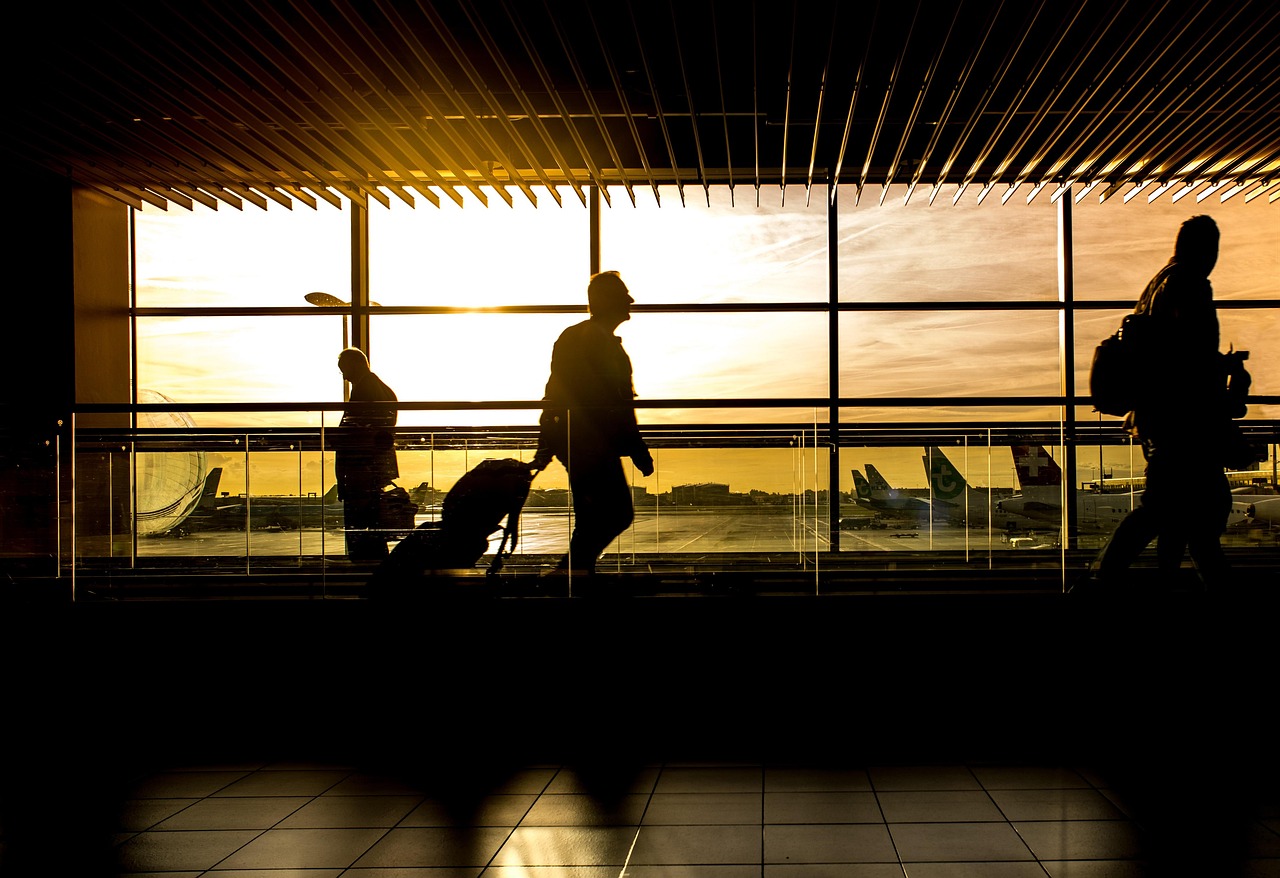
In February 2025, the International Air Transport Association (IATA) reported that global passenger traffic surged past 2019 levels for the first time, reaching 103.7% of pre-pandemic demand. For Hong Kong International Airport (HKIA), this translated to a 34% year-on-year increase in passenger volume, pushing transit lounges to capacity levels unseen since 2018. But something else is happening in these liminal spaces. As layovers stretch longer—the average transit time through major hubs now sits at 3.2 hours, according to a 2024 Skytrax study—a distinct creative subculture has emerged. Writers, particularly those on the Hong Kong-to-Europe and Hong Kong-to-North America corridors, are weaponising the airport lounge not as a place to endure, but as a laboratory for observation. The sterile white light, the clatter of a cappuccino cup against a marble counter, the murmured negotiations of a businessman in 42B—these are not background noise. They are raw material.
The Anatomy of Transit as Creative Fuel
The airport lounge occupies a unique psychological territory. It is neither departure nor arrival, neither home nor destination. This suspension between states, what the French anthropologist Marc Augé called a “non-place” in his 1995 work Non-Places: Introduction to an Anthropology of Supermodernity, strips away the usual social markers. In a lounge, the investment banker in a bespoke suit and the backpacker in a crumpled linen shirt are equals, both waiting for the same 10:45 AM boarding call.
The Cathay Pacific Pier Lounge: A Case Study in Controlled Chaos
I have spent more hours than I care to count in the Cathay Pacific First Class Lounge at The Pier, HKIA. The space is deliberately designed for sensory management: the dimmed lighting, the muted grey-velvet armchairs, the faint scent of green tea diffusers. But the real show is the people. At 6:30 AM on a Tuesday in March, I watched a retired couple from Vancouver methodically photograph every item on the breakfast buffet—the congee station, the basket of pineapple buns, the single poached egg on a bed of sautéed mushrooms. They were not influencers. They were archivists, documenting a moment that would never recur. Across from them, a woman in her late 30s, likely a lawyer based on the firm’s letterhead on her tablet, was furiously editing a brief while her toddler entertained himself with a plastic spoon and a napkin. These are not anecdotes. They are character sketches waiting to be written.
The lounge’s layout itself dictates the narrative. The long, narrow corridor leading to the dining area forces you to walk past every occupied table, offering a slow-motion parade of humanity. The bar, positioned at the far end, is where the solitaires sit—the ones nursing a single glass of Champagne not because they want to drink, but because they need a reason to stay. I have never found a better place to study loneliness than a Cathay Pacific lounge at 10 PM on a Sunday.
The Liminality of the Gate Area
If the lounge is a controlled environment, the gate area is the wild. At Gate 27 in Singapore Changi Airport’s Terminal 3, I once spent 45 minutes watching a family of five from Mumbai attempt to fold a stroller that clearly had not been designed for folding. The father’s mounting frustration, the mother’s calm redirection, the youngest child’s fascination with the stroller’s wheels—it was a three-act play compressed into less than an hour. The gate area strips away the curated calm of the lounge. Here, the masks slip. The businessman who was composed in the lounge now paces, checking his watch every 17 seconds. The couple who were laughing over cocktails now sit in silence, one scrolling Instagram, the other staring at the departure board.
The Mechanics of Observation: A Writer’s Field Guide
Effective people-watching is not passive. It requires a system. Over the past decade of transiting through HKG, Changi, Heathrow T5, and Dubai T3, I have developed a methodology that yields consistent creative material.
The Three-Minute Rule
Do not judge a traveler in the first three minutes. The initial impression is almost always wrong. The man in the rumpled suit is not a failed businessman; he is a surgeon who just finished a 14-hour shift. The woman with the designer handbag is not a socialite; she is a logistics manager who saved for two years for that bag. I learned this rule the hard way during a 2022 layover at Heathrow T5. I had pegged a young man in a hoodie as a student. He was, in fact, the head of a cybersecurity firm worth GBP 40 million. The three-minute rule forces you to hold your judgment, to gather evidence before constructing a narrative.
The Soundtrack of Transit
Every airport has a distinct sound profile. HKIA is the low hum of the MTR train arriving at the station, the click of a rolling suitcase over the polished concrete floor, the Cantonese announcement that sounds like a song even when you cannot understand the words. Changi is the waterfall in Jewel, a constant white noise that masks conversations. Dubai is the clink of gold jewellery at the duty-free, the rustle of abayas, the high-pitched laughter of a group of Emirati teenagers. I keep a voice memo on my phone labelled “Airport Sounds.” In the past 18 months, it has 47 recordings. They are not for publication. They are for texture, for the moment when a character needs to feel the weight of a place.
The Observation Journal
I carry a Moleskine notebook that has been through 14 airports. The pages are not neat. They are filled with fragments: “Man, 50s, navy suit, reading a hardcover Murakami, sips espresso exactly every 90 seconds.” “Woman, 30s, crying quietly into a tissue, phone face-down on the table.” “Couple, 60s, holding hands, she is asleep on his shoulder, he is reading the Financial Times.” These fragments are seeds. Some germinate into short stories. Others remain as they are, a record of a moment that existed and then vanished.
Case Studies: From Lounge Observation to Published Work
This is not a theoretical exercise. Some of the most compelling contemporary fiction has its roots in airport observation.
The Business Class Triptych
In 2023, the novelist Tania James published Loot, a novel about an Indian woodcarver in the 18th century. In an interview with The Paris Review, James described how the idea for the novel’s central dynamic—the tension between the artisan and the patron—came from watching a British executive berate a Singapore Airlines flight attendant over a meal choice in the SilverKris Lounge. “He was so certain of his entitlement,” James said. “I thought, that is the voice of the coloniser, and I needed to understand it.” The observation became the foundation for the novel’s antagonist.
The Layover Anthology
The 2024 anthology Terminal: Stories from the Departure Lounge, published by Granta, features 17 stories, each set in a different airport. The editor, Sarah Hall, wrote in the introduction that the project began during a 14-hour layover at Incheon International Airport. “I had never been so bored and so fascinated at the same time,” she wrote. The anthology sold 12,000 copies in its first month in the UK alone, according to Nielsen BookData. The takeaway is clear: the airport is not a void. It is a stage.
Practical Strategies for the Hong Kong Traveler
For the Hong Kong-based writer, the airport is an extension of the city itself—a place of constant motion, of deals made and unmade, of families reuniting and parting. The following strategies are designed to turn your next layover from dead time into creative time.
Choose Your Lounge Strategically
Not all lounges are created equal for observation. The Cathay Pacific Business Lounge at The Wing, HKIA, is a social space, with groups of colleagues debriefing after a meeting. The Plaza Premium Lounge at Changi T3 is quieter, with more solo travelers. The SilverKris Lounge at Changi T3 has a dedicated quiet zone that is terrible for people-watching but excellent for writing. Know what you need before you book.
The 2:1 Rule
For every two minutes of observation, spend one minute writing. The temptation is to observe indefinitely, to build a complete narrative in your head. Do not. The act of writing forces you to commit, to choose a detail over a generality. I set a timer on my phone: 20 minutes of observation, 10 minutes of writing. Repeat until boarding.
The Departure Board as Plot Device
The departure board is a generator of conflict. A delayed flight. A gate change. A last-minute cancellation. These are not inconveniences; they are plot points. In a 2024 short story published in Granta, the protagonist’s entire arc was triggered by a 45-minute delay on a flight from HKG to London. The delay forced her to sit next to a man she had been avoiding for three years. The departure board is the most underutilised narrative tool in the airport.
The Closing: Three Actionable Takeaways
- On your next transit through Changi or Heathrow, spend the first 20 minutes in the lounge without your phone—just observe, then write for 10 minutes, and repeat.
- Keep a dedicated voice memo folder labelled “Airport Sounds” to capture the acoustic texture of each hub, not for publication but for sensory recall.
- Choose your lounge based on the type of observation you need: social for dialogue and group dynamics, quiet for solitude and introspection, and gate-area for raw, unfiltered human behaviour.